MMR vaccines

Here’s some classic rock music for you while you read! This song is called Lola by the Kinks.

Andrew Wakefield’s Research

In 1998, Andrew Wakefield conducted a study aiming to study the correlation between certain vaccines and regressive developmental disorders. His study included 12 children (11 boys and 1 girl) with a mean age of six years. These subjects were described in the paper as a consecutive series, and were referred to a pediatric gastroenterology unit with histories of normal development followed by a loss of acquired skills, such as language. However, Wakefield was later found of ethical violations during the research, as he conducted investigations on the children without obtaining the necessary ethical clearances and scientific misrepresentation, as the so called consecutive sampling was selective. He was also found that the funding for this research came from lawyers who had been engaged by parents in lawsuits against vaccine-producing companies.

There was a complete lack of a control group in this study. If one had to examine if ” MMR vaccines cause regressive developmental disorders”, they have to compare vaccinated children to unvaccinated ones on a large scale and see if autism rates differed, but the study relied on a very small sample and made the link back from autism. Wakefield’s findings were not capable of being replicated by other research groups. The scientific method consists of making observations, conducting background research, forming a testable hypothesis, experimentation, data analysis, and communicating results. Wakefield’s research made the opposite link while making observations: it should have used a large sample and saw only children who had the MMR vaccine and had development disorders later.

Madsen’s Research

Madsen’s study also researches the correlation between autism and the MMR vaccine. The study included a total of 537,303 children born in Denmark between January 1991 and December 1998, with their health, developmental, and human status identified through Danish National Board of Health, Danish Psychiatric Central Register, and the Danish Civil Registration System. The controls for this study were essentially the unvaccinated children within this same population, ensuring that there were less of other variables such as social environment. Of the total cohort, 440,655 children (82.0%) had received the MMR vaccine, while the remaining 96,648 children served as the comparison group to determine if vaccination status influenced the risk of developing autism.

The study was conducted within the context of the Danish national vaccination program, which offered the MMR vaccineto children at 15 months and 12 years of age. The specific vaccine used during the study period was M-M-R II. The rationale for this retrospective study was the growing public concern and hypothesis that the MMR vaccine was a cause of autism. This concern was fueled by reports of increased in autism incidence, and specific case reports suggesting that children developed developmental regression and gastrointestinal symptoms shortly after vaccination. Current studies designed to evaluate the link between MMR vaccination and autism are not developed enough support
associations, as the evidence is weak and based on case series. Madsen provided reliable evidence to evaluate the real association.

Relative Risk Ratio

The relative risk ratio is a statistical measure used to compare the risk of a specific health outcome between two different groups. In clinical studies, it is calculated by dividing the risk of the outcome in the exposed group (such as those who received the MMR vaccine) by the risk in the unexposed group (those who did not recieve the vaccine). A relative risk of 1.0 indicates that the risk is identical in both groups, and a value greater than 1.0 suggests an increased risk associated with the exposure, while a value less than 1.0 suggests a decreased risk or no association. By calculating the relative risk ratio, Madsen would come down to how much MMR vaccines are correlated with autism . The relative risk ratio for autism in this study is 0.92, implying that there is almost no link between the MMR vaccine and autism.

In Madson’s study, their analysis yielded an adjusted relative risk of 0.92, with a 95% confidence interval ranging from 0.68 to 1.24. Because this ratio is close to 1.0 and the upper confidence interval includes 1.0, there is no statistically significant link between vaccination and autism. The study found that the risk of autism was essentially the same regardless of whether the child had been vaccinated or not. Further, the researchers observed no association between the age at vaccination or the time since vaccination and the development of autistic disorder. Ultimately, the Madsen paper follows ethical guidelines and the scientific methods, statistically proving that the MMR vaccine does not trigger autism on large scale.


.
Antibiotic resistance

Hello to March! Here’s some great classic spring music, Here There and Everywhere by the Common People, a high school who did fun music band back then. The song was orginally by the Beatles.

NDM-1 plasmid and antibiotic resistance

NDM-1 refers to New Delhi metallo beta lactamase-1, a novel MBL that confers resistance to all β-lactam antibiotics. It was first discovered in Sweden in a K. pneumoniae strain isolated from a patient from New Delhi, India in 2008, and some retrospective studies identified NDM-1 from 2006. Since its discovery, it has become endemic to the Balkans and Middle East, spreading to the world as it has the ability to spread rapidly between different bacterial strains, such as in E. coli. The gene that encodes for NDM-1 is  blaNDM-1, and it spreads to other bacteria by horizontal gene transfer, specifically conjugation, unidirectionally from a donor bacterium to a recipient bacterium through direct contact. Efficient transfer also envolves novel hybrid plasmids formed through recombination.

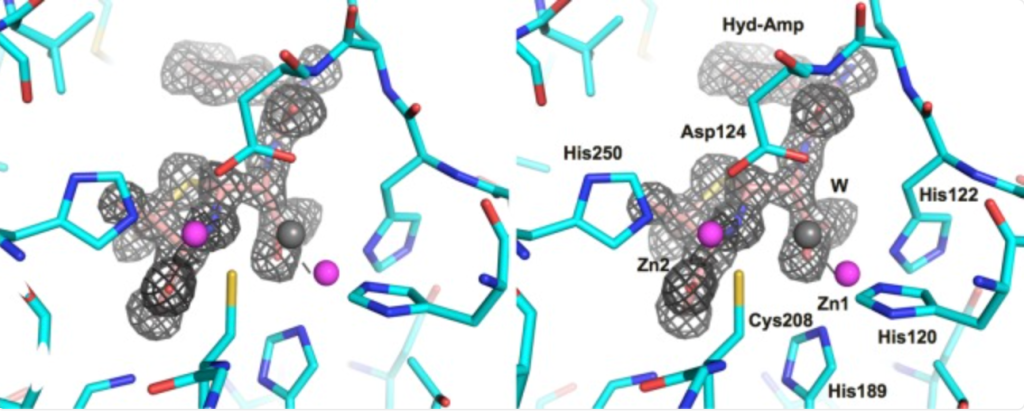
NDM-1 in complex with hydrolyzed ampicillin. Image credit Kim et al.

The plasmid is most commonly found in Gram-negative bacteria that naturally inhabit the human gut, making household and hospital settings very susceptible to transmission. Between 2019 and 2023, NDM-CRE infections surged by more than 460% in the United States (CRE meaning carbapenem-resistant Enterobacterales, resistant to some of the strongest antibiotics available). In a New York City report, cases increased from 58 in 2019 to 388 in 2024. This suggests a high possibility of community transmission beyond healthcare settings where CRE transmission has previously been identified. These results show the need for alternate solutions than antibiotics for better infection control.

Human behaviors that contribute to the rise of antibiotic resistance

Antibiotic resistance is a global public health problem, as it doesn’t just affect you but the whole population. Specific types of bacteria adapt after constant use of antibiotics to treat bacterial infections, and we commonly use new drugs to treat the same disease to prevent this. Overprescribing antibiotics is the primary driver of rising bacterial resistance nowadays, and is estimated to have caused more than a million deaths worldwide in 2019. As bacteria cells frequently divide and multiply, at each division, there is the possibility of mutation that would bring out resistance genetics, so each time antibiotics are used, bacteria have another chance to adapt, leading to antibiotic resistance.

It might be common sense that stopping antibiotic courses early would help combat antibiotic resistance as we’re giving less antibiotics in general, but it might cause incomplete clearance of bacteria and recurrence of the disease, needing more antibiotics in total. Agricultural use would also lead to antibiotic resistance, as veterinary antibiotics would pre-select the resistant bacteria. These bacteria could also spread to humans through food, water, and direct contact, making treatments less effective. Global travel acts as a vector for spreading antimicrobial-resistant bacteria, with roughly 30% of international travelers returning with antibiotic-resistant pathogens. Through very easy travel routes such as direct international flights, not only humans but also animals and goods could carry antibiotic-resistant pathogens.

Overprescribing antibiotics in early childhood

Overprescribing antibiotics in early childhood could cause life health issues with kids growing up. According to a study, children exposed to antibiotics before age 2 face a 24% higher risk of developing asthma. This risk appears to follow a “dose-response” pattern, meaning the probability of respiratory issues increases with every subsequent course of medication. In the gastrointestinal system, frequent antibiotic use is associated with a 42% increased risk of Celiac Disease Autoimmunity. These findings are related to the Hygiene Hypothesis, as it suggests that reduced early childhood exposure to microbes, bacteria, and parasites, prevents the immune system from developing proper tolerance, leading to increased allergies and autoimmune disease. Consequently, the medical community is increasingly viewing the first 1,000 days of life as a “critical window” where antibiotic stewardship is most vital.

A popular view is that antibiotics in early life would lead to spectrum disorders such as ADHD and autism as children exposed to antibiotics were 18% more likely to later be diagnosed with ADHD. There are many cases against this, such as research proof that antibiotics at 1 to < 3 years did not show an association with IBD or Crohn’s disease. There is also a sibling-matched analyses in 2024 that challenged this. When comparing siblings with different antibiotic histories, the correlation to autism largely disappeared, indicating that genetics or shared environments rather than drugs may be the true cause. This highlights the complexity of our gut brain axis and the need for more studies to separate correlation from causation in medical areas.

Raw milk and our microbiome

Listen to Heaven or Las Vegas by the Cocteau Twins, the anscestor of shoegaze, while you read!

The claimed benefits of drinking raw milk

Raw milk is often not suggested drinking because pathogens in them can cause a range of diseases such as salmonellosis. However, these potential diseases does not mean that raw milk does not have benefits. According to the Gabriela study, the comsumption of raw milk is inversely associated to asthma, its effecting factor being its whey protein fraction. It is worth noting that pasteurization may cause losses of various vitamins such as vitamin C and vitamin B12. As milk is an excellent source of vitamin B12, pasteurizing it would cause vitamin deficiencies in humans.

Whey proteins are used in humans for muscle building and recovery. The most notable change when pasteurizing occurs in these proteins, as 10-20% of them denature. This denaturation could change the way milk proteins are digested, but it does not alter the nutritional value. Think of it as whether it is milk or yogurt that gets to your stomach, the proteins inside would be digested and utilzed nevertheless, as in the end it’s the same amino acids. Interestingly, casein, which is 80% of milk proteins, is heat stable so is not affected by pasteurization. When it comes to probiotic presence in the gut, as studies show that there is an increase in Lactobacilli and valerate after a 12-week raw milk intake,and pasteurization will eliminate almost all microbial communities, including pathogens and useful bacteria.

Health risks of drinking raw milk

According to CDC, in 20 years, there were 202 outbreaks linked to drinking raw milk, causing 2,645 illnesses and 228 hospitalizations. These illnesses are caused by pathogens found in the milk, the most common and familiar of them E. coli and Salmonella. These organisms aren’t just technically in the cow’s body when producing the milk, but however transmitted to the milk while milking the cows. For example, if teats and other milking equipment was insufficiently cleaned, it can lead to direct contamination of raw milk with pathogens. When storing the collected milk, inappropriate temperature control (such as high temperatures in some geographic areas), can also lead to accelerated growth of pathogens.

Standard Plate Count (SPC) and coliform count is used to measure the cleaness of milk, with SPC a measure of the total number of aerobic bacteria in the milk. High SPC numbers can indicate a dirty milking and packaging process. Raw milk is allowed to have up to 100,000 colony-forming units of bacteria/ mL in SPC testing, and coliforms up to 750 CFU/mL of milk; for pasteurized Milk the limit it would be 20,000 CFU/mL and fewer than 10 CFU/mL for coliforms. For E. coli, the ID 50 is really low so a single drop of contaminated milk would likely give you intestine problems. However, Salmonella has a high ID 50 so therefore drinking raw milk would give you that huge amount of pathogens needed. It is also worth noting that in pasteurized milk, a high ID 50 is almost never reached because the starting population is almost zero: no matter how it duplicates it can’t reach that high of a number.

Outbreaks associated with drinking raw milk

One of the largest outbreaks associated with raw milk took place in between September 2023 and March 2024 in California, with a total of 171 outbreaks associated with Salmonella Typhimurium identified. Among the 171 cases, 70% were among children aged <18 years, and and 18 (82%) of the cases required hospitalization. Common signs and symptoms include diarrhea, fever, stomach cramps, nausea, vomiting, and headaches. The salmonella came from one single cow that was recently added to the herd, and the company had to cease production and recall all diary products related to the milk. Children, with still developing immune systems, are most susceptible to this disease, and it is proved as most people hospitalized were children.

The people who consume raw milk would pose larger public health risks. With current science developing, pasteurized milk has almost no difference in nutrition as raw milk, and in most cases they are fortified with vitamins A, D, iron, and more, giving more nutrient content. The pasteurizing process would only cause a minimal loss of nutrients. Some diseases associated with raw milk, such as E. coli and Salmonella mentioned before, could be transmitted fecal-orally. Therefore, if sewage water isn’t cleaned very well and contaminated streams and lakes, all the people associated with that would be at a high risk of these diseases, posing more healthcare problems. It would be wiser to drink pasteurized milk as it contains more nutrients and be safer for society.

UPF and our microbiome

Listen to the very classic shoegaze band, Slowdive, while you read!

Today we are going to talk about how the daily food we eat impacts our microbiome. In contrast to assumptions that we eat mostly healthy if we’re conscious, 75% of the food in the US is ultraprocessed. Ultraprocessed foods (UPFs) aren’t as complicated as food stuffed full in harmful chemicals, but simply, by definition, foods that have have one or more ingredients that wouldn’t be found in a kitchen, like chemical-based preservatives and sweeteners like high fructose corn syrup. Also contrasting to the common knowledge that UPFs are just unhealthy junk food, there is less-unhealthy UPF such as whole grain bread and yoghurt. These food have low fat and sugar and have plenty healthy nutrients, but they reduce satiety, as the industrial processing alters their structure, making them softer and easier to eat and digest. This overrides natural fullness signals and cause people to overeat. 

Some common additives in UPF include emulsifiers, artificial sweeteners, preservatives, and colorants & flavor enhancers. Emulsifiers might sound complicated, but making homemade mayo involves the emulsifying process! From egg yolks to artificial chemicals, these thickening agents could strengthen dough crumb texture, lengthen the shelf life of cream-based foods, and act as gelling agents; which make them great for pastries. Artificial sweetners are also predominant in zero-calorie foods, and they could be sweeter than sugar, so minimal amount may be added to them. While giving sweetness, they don’t raise blood sugar levels and don’t cause cavities. Preservatives make foods last longer by controlling food spoiling from microorganisms, and is cruical in a variety of foods to ensure safety.

UPFs are characterized by lower levels of beneficial bacteria like Akkermansia muciniphila and Faecalibacterium prausnitzii, and an increase in pro-inflammatory microorganisms. They are also low in prebiotic fibers needed to produce SCFAs. Specifically,  Short-Chain Fatty Acids (SCFAs) synthesis could be largely affected with the decrease of pro-inflammatory cytokine production. They are important as they are crucial systemic mediators that influence metabolism, immune function, and homeostasis. Besides this, immune modulation, such as epigenic mechanisms that promotes anti-inflammatory effects primarily through the suppression of NFkB.

Our gut is lined by a thick mucus that helps protect us against harmful bacteria, as they don’t get into the blood vessels directly. As UPFs are low in fiber, fiber deprivation could lead to the proliferation of mucus-degrading species such as Akkermansia muciniphila and Bacteroides caccae, and a decrease in fiber-degrading bacteria such as Eubacterium rectale and Bacteroides ovatus in the mucus layer. Specifically, Emulsifiers used in UPFs can prevent the growth of beneficial bacteria with anti-inflammatory properties, which can increase gut permeability and bacterial translocation directly into the bloodstream. Recent research points towards that food emulsifiers can increase intestinal permeability, alter microbiota composition, promote E. coli translocation across the epithelium and causing gut inflammation.

Irritable bowel syndrome (IBS) is a condition in the stomach that causes cramping, belly pain, bloating, gas, and diarrhea. It is often defined by visceral hypersensitivity, where the nerves in the gut overreact to normal sensations like gas or digestion. This condition is impacted by changes in the gut microbiome, which is relevant to eating UPFs. Research has shown that an 8% higher risk of IBS was associated with every 10% increment of UPF consumption. Specifically, additives as well as high-FODMAP ingredients in many UPFs are known to trigger IBS symptoms and low fiber content in a diet high in UPFs. 

Reducing the intake of ultraprocessed foods could mitigate early-onset colorectal cancer. Common emulsifiers in UPFs like Carboxymethylcellulose (CMC) and Polysorbate-80 act like soap on the gut lining, washing away the protective mucus layer. This allows bacteria to touch the colon wall, creating a state of chronic inflammation that fuels tumor growth. Further, food dyes like Red 40 (Allura Red), have been shown to incite a concealed tissue-specific inflammation in the colon and rectum, laying the groundwork for colorectal carcinogenesis, especially with a high-fat diet. There are some exceptions in UFPs in this case, such as yoghurt in women, as theircalcium and probiotics might counteract some of the processing risks.


alcohol and our microbiome

Hear from a great ambient musician, Grouper, while you read!

Chronic alcohol consumption has some really straightforward effects, such as social and direct medical issues. Today, we are going to talk about the much neglected microbiome, especially its decline in composition and diversity, caused by chronic alcohol consumption. Specifically, it can cause the gut microbiome to go from homeostasis to dysbiosis; creating toxic metabolites to digest the ingested alcohol; and destroying the intestinal lining, causing a leaky gut. For example, the Lachnospiraceae and Prevotellacea groups are affected the most, where these often-found bacteria are declining in number, causing dysbiosis.

A common toxin the body creats to digest alcohol is acetaldehyde. Alcohol is metabolized mainly by two enzymes, alcohol dehydrogenase (ADH) and aldehyde dehydrogenase (ALDH). First, ADH metabolizes alcohol to acetaldehyde, the toxic substance we are talking about. Then, acetaldehyde is further metabolized by ALDH to another byproduct called acetate, which then is broken down into water and carbon dioxide. When acetaldehyde isn’t fully broken down, these carcinogens would stay in your gut and cause damage to the cells and tissues there. It is also worth noting that acetaldehyde is a component of tobacco, so smoking is also very unhealthy to your gut microbiome!

To investigate impacts of alcohol consumption on the microbiome leading to anxiety and depression, we need to reintroduce the gut brain axis, which is a bidirectional communication network linking your brain (nervous system) and your gut. This would connect your parts of brain where emotion is susceptible to parts of your intestine, and therefore allowing gut microbiota to influence mood and stress. Research shows microbiome imbalance due to alcoholism and decreased intestinal barrier integrity can have effects on the central nervous system leading to increases in depression and anxiety.

To explain this more clearly, we are going to use an example of liver disease caused by drinking. In liver diseases caused by alcohol use disorder, production of neuroprotective KYNA is decreased in humans with alcolhol use disorder compared to sober humans, with the production shifting to yield increase in the neurotoxic metabolite quinolinic acid (QUIN). This decreased ratio of KYNA/QUIN woudl positively correlate with fecal abundance of Faecalibacterium in our gut. Plasma levels of the KYNA produced to protect our nervous system is shown to negatively correlate with depression and alcohol craving.

To restore a healthy microbiome, prebiotic fiber supplementation after drinking would alter microbiota abundance, such as increasing serum levels of brain-derived neurotrophic factor and improved sociability. With the recent advancement is psychobiotics, young drinkers could seek a solution with coping with drinking by letting these prebiotics work on the gut brain axis mentioned before: with alterations to the gut microbiome, our brain is generally less depressive.

It is also common thing to drink lots of milk products before and after drinking. However, it is not milk that works its magic, but any food with high fat, protein or even carbohydrates, with could delay your stomach emptying, and therefore slowing down the absorption of alcohol. Some British people would deal with hangovers with a big breakfast with eggs, as eggs contain cysteine that could reduce nausea, headache, stress and anxiety; which could prevent further drinking. And from experience, if your face turns red, please stop drinking, it shows your digestive system is lacking enzymes to reduce alcohol and it could be stuck in your liver, putting more pressure on organs.

sugar and our gut-brain axis

Hear from one of my favorite artists, Nala Sinephro, while you read!

Of course, we eat tons of sugar each day, whether pretty visibily through candy and chocolate, or obscurely by eating even pasta. Today in this blog, we will explore together how sugar affects our health by impacting the human microbiome and the gut-brain axis.

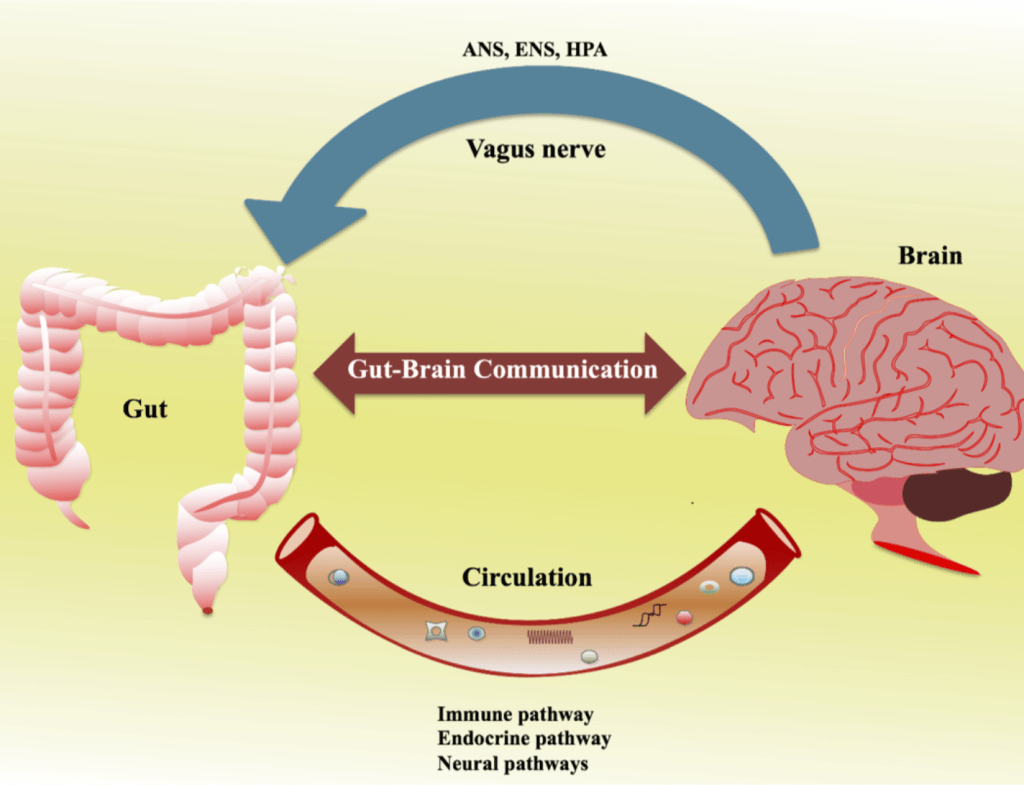
The gut-brain axis, quite literally, is made of the brain and the gut. They are like friends texting 24/7, as smooth as a two way highway that links your thoughts in your head with your friend’s, except that in your body it links your brain and gut. The friends get messages through phone wires, and in our body the massive phone line called the Vagus nerve, alongside chemical messengers like serotonin, that actually helps control your mood (your friend’s messages impacts your mood). Living inside your digestive system are microbes, like a huge extensive friend group that help digest your food and send reports to your brain. This is why eating a bunch of junk food can make you feel grumpy and tired (your friend is spamming you with useless memes and you’re bored). Essentially, your head and your stomach are a best friend team: when one is happy, the other usually feels great too.

photo uploaded by Suganya, Kanmani, and Byung-Soo Koo via Widimedia

Different types of bacteria work together to keep your gut healthy. When you eat too much added sugar, you’re dumping junk food all over a city, and the bad bacteria and take over, killing the good bacteria such as Bacteroidetes, the ones that make short-chain fatty acids. Without those short-chain fatty acids, the protective gut barrier will break down, allowing harmful toxins that were supposed to stay inside to escape into your bloodstream, causing disease. Not only do they decrease the amount of good bacteria, they feed bacteria that consume the protective mucus layer of the gut, giving more space for harmful microorganims to enter. Switching to artificial sweeteners at most times would be a good option, but there are some that have negative impacts to your total health such as acesulfame K affecting glucose transport systems.

A high sugar diet can cause multiple disorders. As we mentioned above, our gut barrier would break down, leading to a leaky gut. The vagus nerve in the axis would transmit these inflammatory and neuroactive signals from the gut to the brain, such as neuroinflammation and oxidative stress. These mechanisms show that the gut-brain axis would be susceptible through neuroimmune, endocrine, and neural pathways, heightening susceptibility to neurodegenerative diseases like AD and PD, as well as neurodevelopmental disorders. Further, individuals consuming ≥25% of daily calories from added sugars had a nearly 3-fold increased risk of cardiovascular mortality, such as stroke.

The gut-brain axis facilitates a complex dialogue between intestinal microbes and the central nervous system. These associations are driven by several key microbiome-mediated mechanisms. First, the production of metabolites which can either protect or inflame the brain by modulating the activity of the brain’s immune cells. Second, direct signaling through the vagus nerve, which acts as a path for microbial neurotransmitters or toxic organisms to reach the brain. Third, molecular mimicry, where the immune system confuses bacterial proteins with brain tissue.

Today, I had a Raising Cane’s box for lunch. While these types of food seem to have low sugar content, I ate 232% of the daily recommended sugar amount for women. One savory meals often hide a full day’s worth of sugar in the condiments themselves (not counting beverages). Typically, a coleslaw would have around 20 grams of sugar, almost all of the daily recommended amount. Now, many restaurants have a protein option to swap their burger buns with a lettuce wrap, which could be a great way to eat vegetables healthier, and cut sugar in the bun.

In so called low sugar drinks, the sugar levels are higher than we expect. In a 25% sugar boba, there is 10 grams of sugar just in the tea itself. Besides that, we’re getting the boba and other syrups and sauces, which would be easily more than 20 grams of sugar. Added together, this would easily take up the quota for a whole day’s sugar income, regardless of gender. Because boba is liquid sugar combined with carbs, it hits your bloodstream almost instantly. This can cause a sugar crash that affects your mood and feeds the sugar utilizing microbes in your gut that we talked about earlier. So next time when drinking boba, we can choose healthier toppings such as chia seeds, and try to go with 0% to 25% sugar.

Drinking, but in a good way

Per usual, hear from my favorite artist, Khruangbin, while you read! Here’s their website if you want to learn more.

As kids, we don’t get to pick what we drink. Starting from birth, the pacifier stuck in our mouth would give us yummy milk with nutrients and microbiomes that are essential to growth. We didn’t know what milk we had then, but looking back, lets discover how the two major types: breastfed milk or formula, would impact a baby’s microbiome.

Now, you might ask, what is a microbiome? We could start by imagining our human body as a village, and microbiomes are the residents that run the place. For example, there are sanitation workers cleaning the trash, and some are security that protects harm from entering. Scientifically, microbiomes are the collection of all microbes that lives in our body. The initial few years of a human’s life serve as the construction phase for the village, and long term development is set: we are building the basis for long term health.

Breastmilk to the baby is like the building blueprint for the village. One important ingredient in breast milk are HMOs (human milk oligosaccharides), being the third most prevalent solid. However, babies can get no direct calories or nutrients, as they lack the biological system to digest them yet. However, babies are into all types of germs, and this is where HMO comes into affect. Harmful germs have hooks that they use to latch onto the baby’s intestinal walls, and HMOs are covered in the same material as those walls, but they’re floating inside the intestines like loose bits of velcro. When a bacterium tries to hook onto the baby, it would accidentally snag an HMO instead. This resulting floating tangled piece would be swept away by the digestive system, so the bacteria would not get to the baby’s actual tissue. Specifically, HMOs support the growth for Bifidobacterium (B. adolescentis, B. dentium, and B. animalis). It is worth noting that these could be found in breastmilk.

In early stages of life, the gut microbiomes of breastfed and formula-fed infants follow distinct developmental paths. Counterintuitively, formula fed babies have a more diverse microbiome in the earlier stages of life, however it’s a sign that the breast fed has a more specialized, niche microbiome. This is because the breat fed’s guts are dominated by Bifidobacterium, which is populated by the HMOs brought in by breastmilk. In contrast, formula lacks the specific HMOs found in breast milk, so it allows a wider variety of bacteria including those typically found in the adult gut, to be introduced in.

This difference in diversity directly impacts what a child is able to digest. Essentially, during the first six months, the guts of infants who aren’t exclusively breastfed are closer to those of adults, and more complex than those who are. While the non breastfet infants have a wider variety of bacteria, the breast fed have a highly specialized system for the unique composition of human milk. Specifically, the formula fed’s microbial communities act like advanced sugar-processing plants, processing complex carbohydrates such as fructose and mannose; also the biosynthesis of fatty acids and ansamycins. Conversely, breastfed infants prioritizes lipid homeostasis, Vitamin B6 metabolism, and essential free radical detoxification. While the formula fed is built to handle the varied sugars found in formula and solids, the breastfed group optimizes to manage the high fat content of human milk while protecting the developing body from metabolic stress.

Sadly, there are consequences to children who are not breastfed. Significant data shows that infants who are never breastfed face a statistically higher likelihood of developing both obesity and respiratory issues during childhood. Research indicates that formula fed infants have roughly a 15% to 25% higher risk of obesity, due to higher insulin levels in formula and a lack of the specific microbial priming that helps regulate metabolism. Similarly, the absence of breast milk is linked to a 20% to 30% increase in asthma risk, as the immune system misses out on the microbes and antibodies that help calibrate the lungs’ inflammatory response.

While the biological importance is undeniable, there might be many issues in reality- 70% of women face breastfeeding challenges. For example, Maternal health, medication, workplace limitations, and physical challenges mean that breastfeeding isn’t always an option. The goal of understanding this science shouldn’t be to shame parents who can’t breastfeed, but to advocate for better social and scientific support so that those who choose to provide this microbial foundation would be provided equal opportunities.

something about me 🩵

Hi! My name is Silin& I’m from Beijing, China.

Hear from my favorite artist, Khruangbin, while you read! Here’s their website if you want to learn more.

Even though I am born in Beijing, I went to kindergarten and elementary school in Hockessin, Delaware. My childhood was a lot of moving back and forth between the places. If you want to come to Beijing one day, hit me up! I know the best restaurants and bars that would give you the best experience in the best city that fuses modernity while preserving history. Since I’m missing snow in NC alot, here’s a kid picture of me in a Delaware blizzard& a snowy Beijing landmark, the drum tower:

first photo credit to my mom🥰

At UNC, I am a chemistry major on the pre-pharm track. Besides scientific research, I love skating, music (collecting vinyl and going to shows!), travelling, and hanging out with friends. At UNC, I am in the WXYC radio station& actively engaged in research! Here are pictures of me in the figure skating charity show I directed, travelling to Rome this summer, DJing at high school graduation, and with my awesome friends at, according to the New York Magazine, the “purest, most rock-and-roll place in Beijing”, School!